Five-year renewal · Written exam refresher
Renew Your Mobile Crane Certificate Without Letting California Work Stall
Five years goes quickly when you are moving between jobs. A California mobile crane certificate lasts no longer than that, and once the date passes you are no longer legally qualified to sit at the controls of that crane type, regardless of how many lifts you have made. This refresher covers the recertification written exams for NCCCO mobile crane designations and helps you sort out the one question that is genuinely different in this state: whether you will be retaking the practical.
Reviewed · Our research standards
Topics in the prep
- The NCCCO recertification window and what must be finished before the expiration date
- How California's Title 8 renewal language differs from the national 1,000-hour rule
- Logging hours by crane type so the paperwork supports a practical waiver
- Load chart refresh: deductions, configuration notes and working range diagrams
- Ground bearing and outrigger support review for modern crane setup systems
- Power line clearance distances and encroachment procedures
- Rule changes since your last test, including California's 2022 crane order reorganization
- Medical and substance testing steps that come with renewal
National rule, California rule: read both
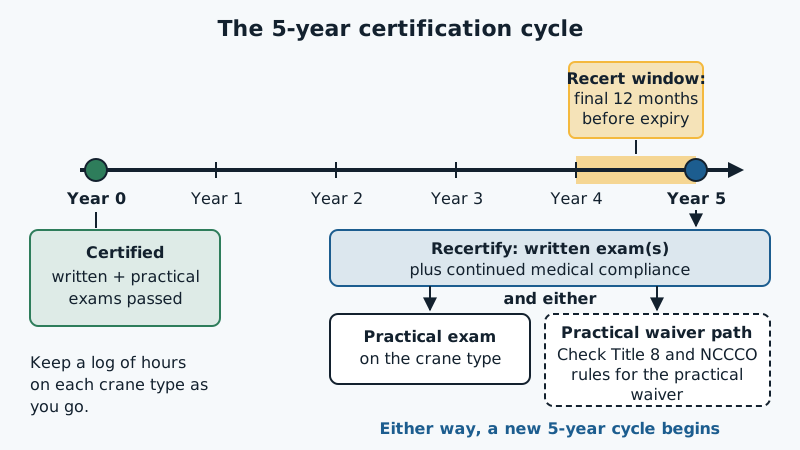
NCCCO's own recertification policy asks you to complete the requirements in the 12 months before your certification expires. That includes recertification written exams and continued compliance with the medical requirements. NCCCO waives the practical exam if you can attest to at least 1,000 hours of crane-related experience during the certification period, and it counts a broad range of work, such as operating, inspecting, maintaining or training on cranes.
Title 8 is narrower as currently written. California's certificate rule ties the practical waiver to at least 1,000 hours of documented experience operating the specific type of crane on the certificate. An operator who spent four years mostly running a boom truck and only occasionally ran a lattice crawler may satisfy NCCCO's broad definition yet fall short of California's type-specific wording for the LAT designation. Because the answer depends on the rule in force on your renewal date, check both NCCCO's handbook and current Title 8 before you assume a waiver.
Petition 598 and why the wording may change
In 2023 NCCCO petitioned the Occupational Safety and Health Standards Board to revise California's recertification language. The Board granted the petition in part in January 2024 and convened an advisory committee that met in July 2024. A rulemaking may follow, or may already be under way when you read this, so we do not predict the outcome. Treat the 1,000-hour, type-specific language as the rule until the Board adopts and publishes something different, and check the current text on the DIR website when you plan your renewal.
Keep a log that would survive an audit
Whichever rule applies, hours you cannot document do not help you. Many operators rely on memory and pay stubs, which rarely show which crane was run. A simple log, kept as you go, is much easier to defend.
- Date, jobsite and employer for each shift
- Crane make, model and configuration, matched to your designation code
- Hours operating versus hours rigging, inspecting or oiling
- Supervisor or dispatcher who can confirm the entry
- Copies of employer evaluations completed on each crane
What the refresher puts back in front of you
Recert written exams cover the same content areas as the original tests, and the specialties still lean heavily on load charts. Operators who have run the same machine for years often find that unfamiliar chart notes, alternate counterweight tables or a different boom configuration slow them down. The course works through those problems again with exam-style practice questions.
It also covers regulatory changes. In July 2022 Cal/OSHA moved its construction crane orders into the General Industry Safety Orders crane group, so section numbers you memorized years ago may have moved. Rated capacity limiters and outrigger-monitoring systems have also become standard on newer telescopic cranes, and you should know how they fit with chart limits.
A sensible renewal timeline
Look at your card about a year out. Book the medical and substance test early so a scheduling delay does not push you past expiration. Study online in the evenings or between shifts, then take the written exams through Online Proctored Testing, a test center or a test event. If you need a practical, schedule it with an accredited practical site well before the deadline. Adding a specialty is possible at renewal; it means passing the full exam for that specialty, including its practical.
Questions people ask
What happens if my certificate expires before I recertify?
You may not operate that crane type in California until you hold a valid certificate again. What NCCCO then asks of you depends on its current lapse policy, which may mean testing again as a new candidate, so read the handbook before the date arrives.
Do the hours I spent oiling count toward the California waiver?
Under NCCCO's definition, crane-related experience such as oiling or inspection may count. California's current wording refers to experience operating the specific crane type, so oiling hours may not satisfy it. Confirm with NCCCO and the Title 8 text in force at the time.
Can my employer accept me as qualified without a recert?
No. For cranes covered by the certificate rule, a qualified operator in California must hold a current certificate for that crane type. The employer's own evaluation is in addition to the certificate, not a substitute.
Is this the right course if I hold an STC or an older BTF designation?
Yes. STC is a restricted sub-category of TSS, and the refresher covers the Core plus the specialty content behind it. If your card still says BTF, note that NCCCO retired that exam in 2021: BTF holders now recertify by taking the Core and the full TSS written exams, with no added practical, and the new card reads TSS. Our service truck crane course adds detail specific to mechanic's truck cranes.
Prep courses
-
Mobile Crane
Online study for the NCCCO mobile crane Core written exam and the LAT, TLL or TSS specialty that matches your machine, framed around how Cal/OSHA actually checks operators on California jobs.
-
Tower Crane
Written exam preparation for the NCCCO tower crane certification, set against the extra layer of permits, notifications and certifier visits that Cal/OSHA applies to every tower crane in the state.
-
Articulating Crane
Study for the NCCCO articulating boom crane written exams online, with the California size limits that decide whether a material delivery truck needs a certified operator at all.
Line up your California crane exam prep
Share the card you need, the crane you run and the part of California you work in. An enrollment advisor writes back with a course match and a plan for booking your written and hands-on exams.
- Lessons and practice questions open around the clock
- Built for the NCCCO written tests Title 8 relies on
- Advice on scheduling the practical exam near you
Ask about enrollment
A short form. Your details are used only to reply to you.