NCCCO tower crane (TWR) · Cal/OSHA permit context
Tower Crane Certification Prep for California's High-Rise and Infill Sites
Tower cranes get more official attention in California than almost any other piece of construction equipment. Before the first pick, the employer has dealt with permits, a Crane Unit notice and a licensed certifier, and the operator in the cab must hold a certificate for tower cranes specifically. This course prepares you for the NCCCO tower crane written exam, self-paced on any device, and explains the state requirements you will see around you on a tower crane job so the paperwork does not catch you off guard.
Reviewed · Our research standards
Topics in the prep
- Tower crane load charts: radius, trolley position, jib length and hook block weight
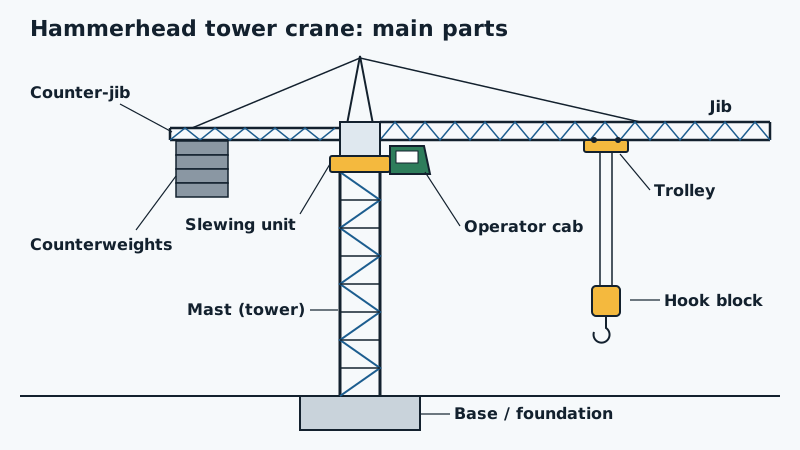
- Hammerhead, luffing jib and self-erecting configurations and their limits
- Wind speed limits, weathervaning and out-of-service procedures
- Blind picks, radio communication and working with signal persons on upper floors
- Zoning and anti-collision systems where several tower cranes overlap
- Daily inspection, limit switch checks and reporting defects
- Cal/OSHA permits, Crane Unit notifications and licensed certifier involvement
- Federal Subpart CC tower crane provisions tested on the written exam
Permits and inspections that come before you climb the mast
California treats a fixed tower crane as a regulated installation, not just a machine. Title 8 §344.70 requires a tower crane permit from Cal/OSHA before the crane is operated, and the Crane Unit has to be notified when a fixed tower crane begins working, is climbed or is dismantled. Erection, climbing and dismantling also require a Cal/OSHA-licensed certifier, a surveyor or a manufacturer's representative on site so the work follows the manufacturer's procedure.
Separately, the crane itself must be certified by a licensed certifier as ready for service after erection, and then annually under §5021 for as long as it stays in use. None of this is the operator's paperwork to file, but you should recognise it. If someone asks you to start operating a crane that has not been certified after a climb, you have a reason to stop and ask questions.
The operator's own certificate
Title 8 §5006.1 and §5006.2 require tower crane operators to hold a certificate from an accredited certifying entity for that crane type. A mobile crane card, however many specialties it lists, does not cover a tower crane. The NCCCO tower crane program combines a written exam with a practical exam taken on one of three crane configurations: hammerhead, luffing jib or self-erecting. You will also need the physical exam and substance test that California's rule requires, and certification lasts up to five years.
Written exams can be taken through Online Proctored Testing, at a test center or at a test event. NCCCO allows the written and practical exams in either order, and gives you 12 months after passing the first to pass the other.
Skills the written exam tests, and why they matter in the cab
Tower crane charts read differently from mobile crane charts. Capacity drops as the trolley moves out along the jib, and the same crane can have several charts depending on jib length and reeving. The course works through radius and capacity problems until you can find the right column under pressure.
Much of the exam is about things you cannot see. Operators on a high-rise frequently pick and land loads out of sight, relying entirely on a radio signal person. You will review communication protocols, what to do when a signal is lost, and why the operator must stop on any unclear instruction.
Seismic design adds its own considerations. Tower crane foundations, tie-ins to the structure and mast sections are engineered for each site, and the operator's part is to report anything that looks wrong at the base or ties after an earthquake, before the crane goes back into service.
- Out-of-service wind settings and allowing the jib to weathervane freely
- Overlapping swing zones and anti-collision systems on crowded blocks
- Limit switch testing at the start of each shift
- Load moment and hoist limit devices and what bypassing them means
Where California tower cranes work
Hammerheads and luffers do most of their work on downtown towers in San Francisco, Los Angeles and San Diego, where tight lots and neighboring buildings favour luffing jibs that do not swing over property lines. Hospital seismic upgrades and replacement towers, biotech and lab buildings, and residential infill near transit lines bring tower cranes into mid-size cities as well. Self-erecting cranes appear on smaller multifamily jobs where a mobile crane cannot stay on site for weeks.
Wind is the daily constraint. Coastal sea breezes typically build through the afternoon in San Francisco, and Santa Ana events can push gusts past a tower crane's in-service limit in Southern California. The exam expects you to know the manufacturer's wind limits and how to secure the crane when it goes out of service.
Questions people ask
Which practical configuration should I choose?
Choose the type you will actually run. A luffing jib practical suits operators heading to dense downtown sites, a hammerhead suits most other high-rise work, and a self-erecting practical suits operators on smaller residential projects. Check NCCCO's current program page for how each is recorded on the card.
Do I need to pull the tower crane permit myself?
No. The permit and Crane Unit notifications are the employer's responsibility, and erection, climbing and dismantling are handled by specialist crews. The operator's responsibility is a valid certificate and safe operation.
Can online study replace tower crane seat time?
No. The course prepares you for the written exam and explains California's rules. The practical exam is a hands-on test on a real tower crane, and employers will expect supervised experience before you run one alone.
Is my employer's evaluation still needed once I hold a tower crane card?
Yes. The certificate shows you passed an accredited exam for tower cranes. Your employer must still confirm you can safely run the particular crane, configuration and site conditions you are assigned to, and it should document that evaluation.
Where these facts come from (9)
- dir.ca.gov/title8/344_70.html
- dir.ca.gov/Title8/344_71.html
- dir.ca.gov/Title8/341.html
- dir.ca.gov/dosh/cranes.html
- dir.ca.gov/title8/5021.html
- dir.ca.gov/title8/5006_1.html
- nccco.org/tower-crane-operator
- nyc.gov/site/buildings/industry/hoisting-nccco-cic-requirements.page
- osha.gov/laws-regs/regulations/standardnumber/1926/1926.1435
Prep courses
-
Mobile Crane
Online study for the NCCCO mobile crane Core written exam and the LAT, TLL or TSS specialty that matches your machine, framed around how Cal/OSHA actually checks operators on California jobs.
-
Articulating Crane
Study for the NCCCO articulating boom crane written exams online, with the California size limits that decide whether a material delivery truck needs a certified operator at all.
-
Rigger I
Learn to inspect gear, choose and tie the basic hitches and knots, and recognize rigging hazards, the core of the NCCCO Rigger Level I credential that many California employers use to document a qualified rigger.
Line up your California crane exam prep
Share the card you need, the crane you run and the part of California you work in. An enrollment advisor writes back with a course match and a plan for booking your written and hands-on exams.
- Lessons and practice questions open around the clock
- Built for the NCCCO written tests Title 8 relies on
- Advice on scheduling the practical exam near you
Ask about enrollment
A short form. Your details are used only to reply to you.